
How to Record Your Grandparents' Stories Before It's Too Late
By Anonymous
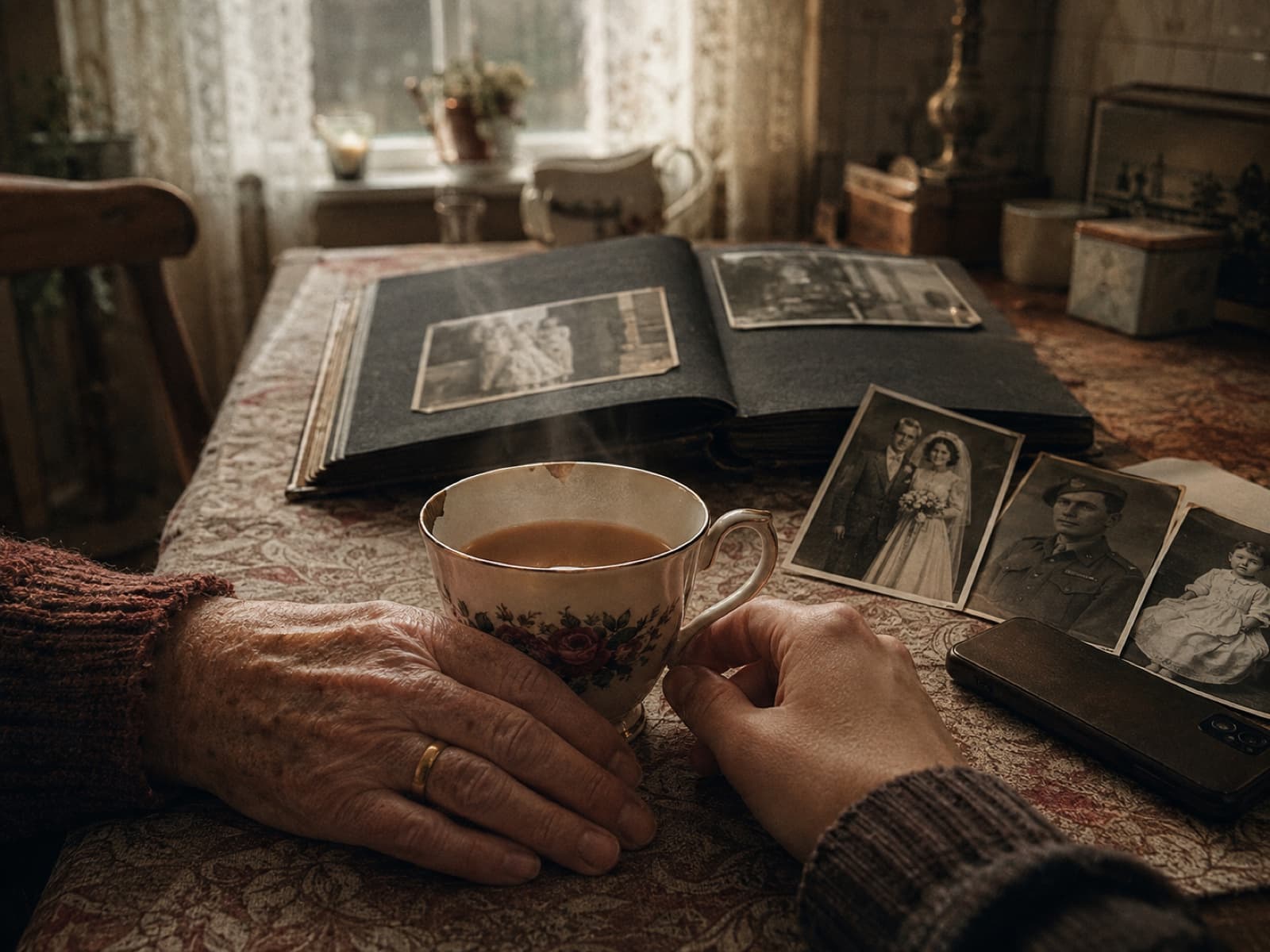
My grandmother told me one story about the war.
It was a Tuesday afternoon in 1998, at her kitchen table in Bury. She was making sandwiches for us. Cheese and pickle, no butter, on Warburtons. She mentioned in passing that her mother had once hidden a Polish airman under the stairs for three nights during the winter of 1943.
I asked how she knew. She said, “Because I brought him his tea. And my mum told me I was never to speak of it.”
I was seventeen. I said something like “wow” and reached for another sandwich.
She died in 2006. I never asked her about that airman again. I don’t know his name. I don’t know what happened to him. I don’t know how my great-grandmother decided to open the door. I don’t know if there were others.
That’s the thing about grandparents. They lived through the century that made ours possible, and most of what they know is going to disappear with them, quietly, in an armchair, on an ordinary Tuesday, because nobody thought to ask the follow-up question.
If your grandparents are still alive, this is a small, practical guide to doing better than I did.
Why the clock is real (without wanting to be morbid about it)
British men born in the mid-1930s have a current life expectancy of around 86. British women, closer to 89. But “alive” and “still able to tell you a proper story” are different things. The average age at which people in the UK begin showing early cognitive decline is somewhere in the late sixties. Most grandparents who are going to have detailed, coherent, warm conversations with you about their lives can do so comfortably up to around 82 or 83. After that, the specifics start to fray.
That’s not a rule. Some 92-year-olds are sharper than their grandchildren. Some 70-year-olds have lost their thread. But it’s a useful frame. If you have grandparents in their late seventies or eighties, you probably have a window of two to five years before recording their stories becomes genuinely difficult.
You do not need to panic. You do need to start.
Why grandparents are harder to interview than parents
The fifty questions we published for parents work for grandparents too, but there are some real differences to be aware of before you begin.
Grandparents didn’t grow up with confession culture. Their parents didn’t ask them how they were feeling. Nobody in 1952 was journaling. If you sit them down with a list of introspective questions, you’ll get short, polite answers. You have to work up to the good material more slowly.
They may minimise their own story. “Oh, nothing interesting happened to me, love.” This is a false-modesty pattern common to people who lived through rationing, austerity, and a culture where making a fuss was frowned on. It does not mean they don’t have stories. It means you have to ask the third question.
They may have things they’ve never told anyone. Not because they were hiding them, but because nobody ever created the space for them to be spoken. A pregnancy loss in 1962. A brother who never came home from a shift at the docks. A first husband who was cruel. A job that ended badly. These stories exist. Being the first person to hear one is a genuine responsibility.
You probably see them less often than you’d like. Which means every visit or call carries the weight of “did I make the most of that”. Try not to let it. This is a marathon, not a sprint. Small conversations, one at a time, add up faster than you’d think.
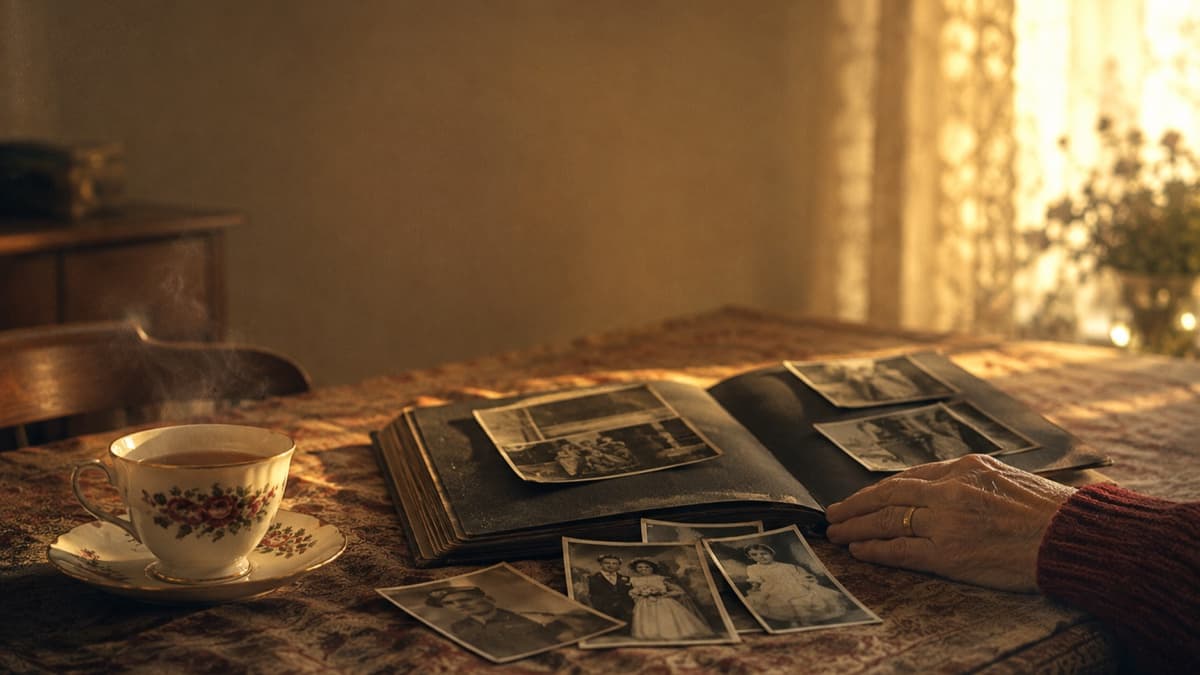
How to actually start (without it being awkward)
The single biggest mistake people make is announcing that they want to do a formal interview. Grandparents from the wartime and post-war generations tend to freeze when asked to “sit down and tell me your life story”. It sounds like homework. Or a eulogy. Or something they’d rather do later.
Instead, do this.
Pick something ordinary you already do together. A weekly phone call. A Sunday visit. A drive to the garden centre. Bring one question. Just one. Ask it in the natural rhythm of the conversation, not as an interview.
“Gran, this is going to sound like a strange question, but what did your mum’s kitchen smell like?”
That’s it. That’s the whole opening. It’s short, specific, sensory, and almost impossible to answer without going somewhere real.
Then let the story go where it goes. Don’t force follow-ups. If she trails off, sit with the silence for a moment. Often the second half of the answer comes only after the pause.
Turn your phone’s voice recorder on before you arrive, put it face-down on the table between you, and forget it’s there. Modern phones have battery for hours of continuous recording. Nobody performs for a face-down phone.
Every time you see them, one question. That is the whole method.
Ten questions specifically for grandparents
These are different from questions you’d ask a parent, because the frame of reference is different. Grandparents grew up in a world whose surface details are already lost, so the value of specifics is higher, and the questions that unlock the real material tend to be more sensory than reflective.
- What did your mum’s kitchen smell like on a Sunday?
Cooking, bleach, coal, boiling ham. The answer will be specific and will lead somewhere. - What was the first piece of news you remember hearing on the radio or television?
For older grandparents this might be the Coronation, the moon landing, a royal death. The answer places them in history. - Tell me about the neighbour you were most curious about as a child.
Neighbours are how children first learn that other adults live differently from their parents. There is always a story here. - What did your parents argue about, and what did they never argue about that they probably should have?
The second half of this question is what earns the honest answer. - What did people on your street do for money when you were fifteen?
Not “what job did you have”. The broader economic texture of a place, which is what makes a memoir feel like a documentary rather than a diary. - Who in your generation didn’t make it, and what happened to them?
Older generations carry a specific shape of loss. Illness, accident, the war, self-harm, a job that killed a body slowly. Ask gently. Do not push. - What did you learn to do as a young adult that nobody does anymore?
Butter-making, ironing linen, killing a chicken, using a slide rule, changing a spark plug, taking a stocking down without laddering it. Real physical knowledge that is disappearing in a single generation. - What did you assume, when you were young, that turned out to be completely wrong?
Asks them to reflect on the specific shape of their prejudices without shaming them, and gives them permission to have grown. - What did your father do that you swore you would never do to your own children?
The intergenerational contract. Often the most quietly emotional answer you will get. - What have you never said out loud that you would like someone to know before you can’t say it?
The closing question. Ask it once, gently, later in the relationship (not on the first call). Then be quiet for as long as it takes.
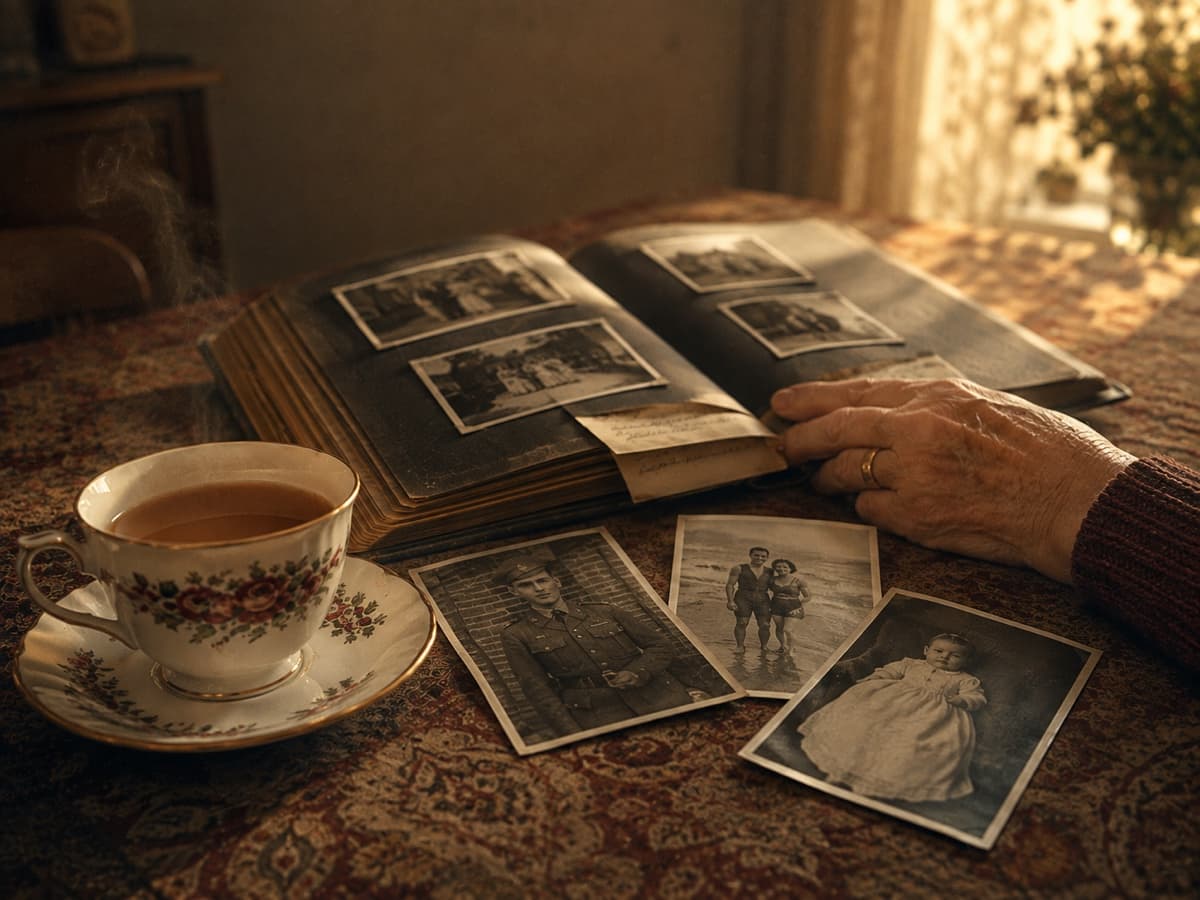
What to do with the recordings
Here’s the practical part most guides skip.
Back them up immediately. Phone-recorded audio is precarious. Broken phone, lost phone, cloud sync failure, deleting them by accident when you clear storage. Every recording, once made, should be uploaded to two places within a week. Google Drive and Dropbox is fine. Google Drive and a hard drive is better.
Transcribe them. The audio is important, but transcripts are what turn conversations into a preservable record. You have two options.
Free or cheap. Otter.ai, Descript, or Whisper (which is open source and runs on your laptop) will transcribe recorded phone audio pretty well. Expect to spend around an hour cleaning up each hour of transcript to fix names, place names, and the moments the software misheard.
Better and more expensive. A human transcription service (Rev, GoTranscript, or a UK-based service like Take Note) will produce a clean transcript for roughly £1 to £1.50 per audio minute. On thirty hours of interviews, that is £1,800 to £2,700. Worth it if you are serious about turning the material into a book.
Label everything. Every file needs a date, a topic, and a location. “2026-05-14 Gran Whalley Range terrace kitchen memories” is a lot more useful two years later than “IMG_4837.m4a”.
Decide what it becomes. Options range from private (a family archive on a hard drive, shared with cousins) to formal (a bound printed book). Most people who start this process end up wanting a printed book at the end, because the physical object is what future generations actually find. Loose audio files disappear. Books live on shelves for a hundred years.
If you don’t have time to do this yourself
This is what our service exists to do. If you would rather not carry the recorder, the transcription, the editing, and the printing yourself, Write My Biography will do all of it. A warm interviewer calls your grandparent on a schedule they choose, asks the good questions and the good second questions, and eventually the whole conversation arrives as a printed hardcover.
Most of the people who use us are adult children or grandchildren who love the idea of doing it themselves, and then realise that between the kids and the job and the distance they will always mean to and never quite start. There is no shame in that. The stories still get told, and you are still the one who set it in motion.
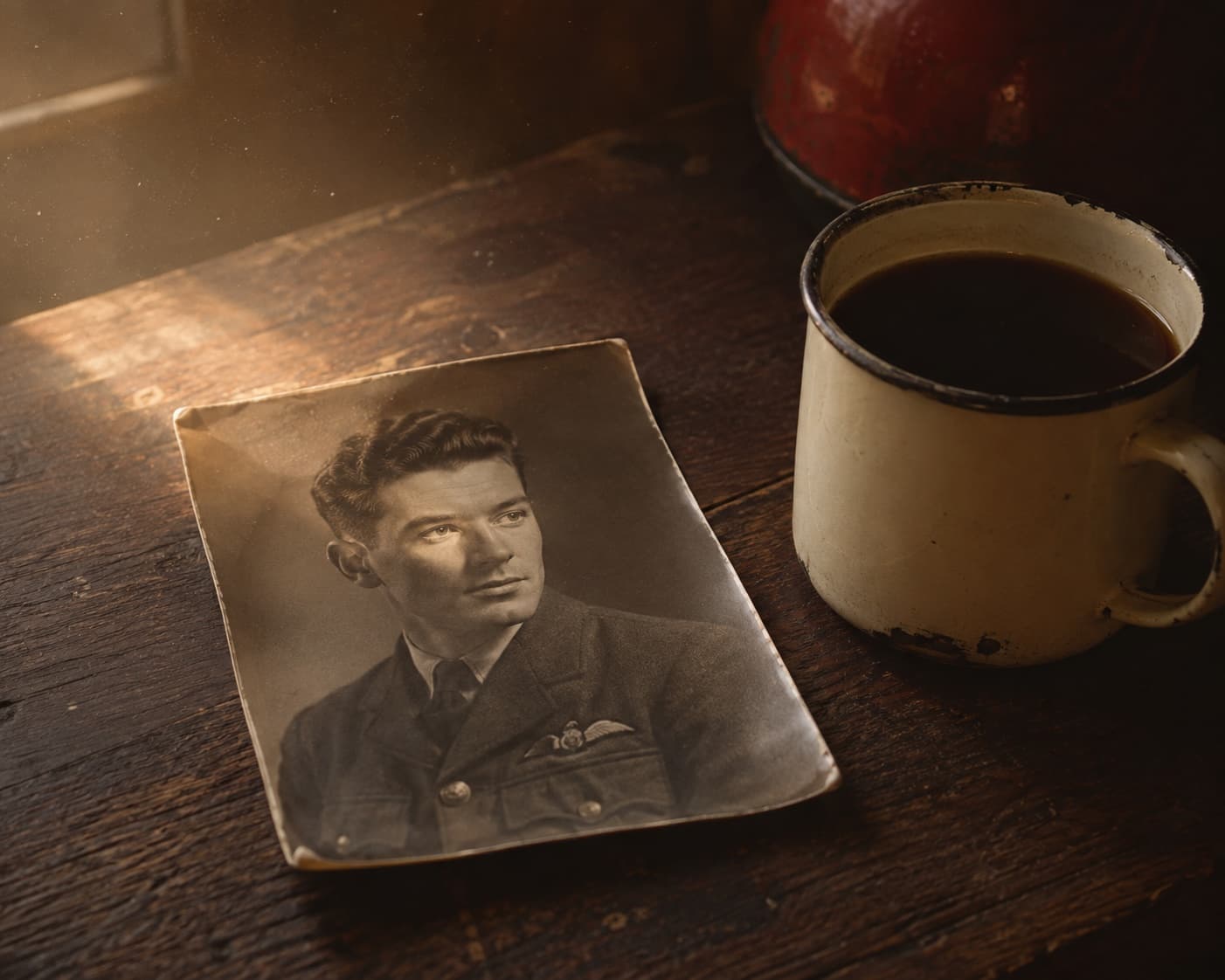
The airman
I still think about the airman sometimes. About who he was, whether he made it home, whether he had grandchildren of his own, whether he ever mentioned the woman in Bury who left him a mug of tea and a bit of bread every morning for three days.
There is no version of the story I can now recover. I can’t ask my grandmother because she is dead. Her mother, my great-grandmother, has been dead for forty years. There is nobody left in my family who was there.
The story ends with a shrug from me at seventeen, at the kitchen table, reaching for another sandwich. That is not the ending it deserved.
If someone in your life still has the story, please, ask them for it. Ask them now. Ask them again if they minimise it. Sit through the silence after the first answer. Turn the recorder on. Follow up. Bring the question back next week.
Some Tuesday soon, you’ll be very glad you did.