
50 Questions to Ask Your Elderly Parent About Their Life (Before It's Too Late)
By Anonymous
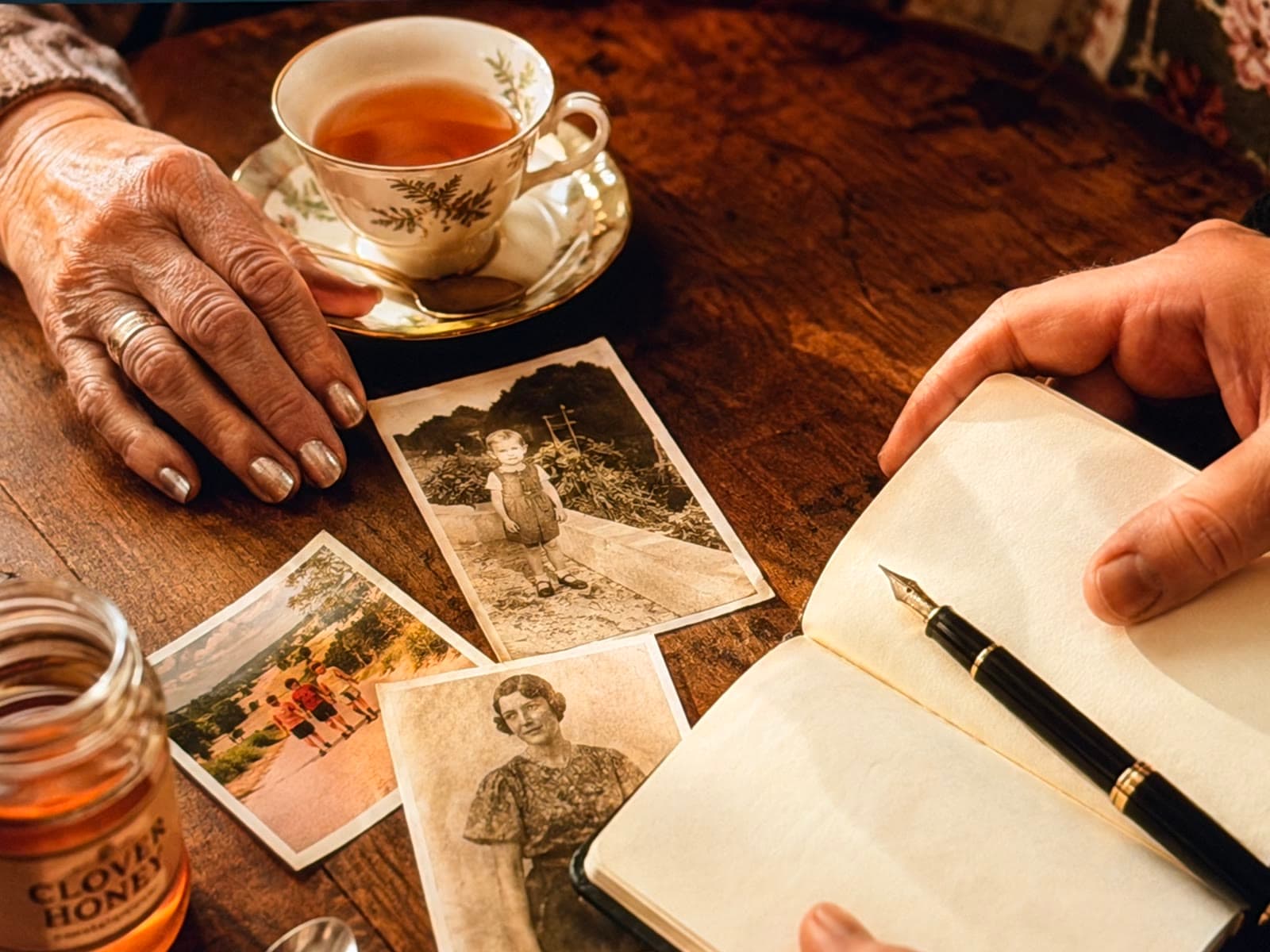
My mother is 71.
Last summer, over tea in her kitchen, she mentioned in passing that her father had once been arrested for playing his trumpet on the street after curfew in 1945. I had known this man my entire life. He'd been dead for twelve years. And in all that time, it had never occurred to anyone in my family to ask him about it.
That's the strange thing about our parents. They contain whole lives we've never touched. Not because they're keeping secrets. Because we haven't asked the right questions.
If you're reading this, you probably know what I mean. There's a quiet, unspecific sense that time is doing something to the person you love. That whatever you're waiting for hasn't arrived yet. That someday you'll wake up wishing you'd sat down with your dad, your mum, your gran, your uncle Frank, and asked them to talk.
Below are fifty questions I've collected over the past few years. They come from memoir writers, oral historians, and from people who have interviewed their own parents before it was too late. These aren't the usual “what was your favourite subject at school” questions. Those questions produce polite answers. The questions below produce stories.
Use them the way that suits you. Print them out. Take one on your next Sunday call. Sit across a table with your mum and a cup of tea and ask three. There is no ceremony required. There is no correct way to do this.
Just don’t wait.
Before you begin, three small things
Record it. However you do it, a phone note, a laptop, a proper microphone. Memory decays fast. Even your own memory of the conversation will be gone in six months. A recording is the version that survives.
Ask one question at a time. This is the single biggest mistake people make. If you ask “what was your childhood like, did you have any pets, and what did you want to be when you grew up?” you get one of the three answered in a sentence and the other two disappear. Ask one thing. Let it sit.
Follow the tangent. If you ask about their first job and they start telling you about a bus driver they had a crush on in 1968, put the list down. That’s the story. The questions are just a way to get you started. Where they take it is where you go.
Childhood
- What did your house smell like when you were seven?
Sensory memory is unlocked by smell more than any other sense. This gets you into a room they haven’t been in for sixty years. - Who was the first person, outside your family, who was truly kind to you?
Not “who was your favourite teacher”. Kindness has a particular flavour they will remember. - What did you and your friends do when you were bored?
Boredom rituals are almost never talked about but are more revealing than achievements. - What did you steal, and why?
Almost everyone stole at least one thing before the age of twelve. This gets a grin and a story. - What did you get in trouble for that you don’t think you deserved?
The bitterness is often still intact. So is the memory. - What did your parents fight about?
Nobody asks this. Everyone knows the answer. - What songs were on the radio when you were fourteen?
Not “what music did you like”. The songs on the radio are what surrounded you whether you liked them or not. - Where did you learn how the world worked?
Might be a book. A neighbour. A conversation overheard through a wall. It’s rarely their parents. - What was the first thing you bought with your own money?
The specificity of the question, the first thing, pulls up a real object. Then ask what happened to it. - Who did you envy at school, and what were they like?
Envy is a particular kind of noticing. They will remember exactly.
Their parents and where they came from
- What did your mother’s hands look like?
Physical detail is what makes a memoir alive. Hands, especially, carry information. - What did your father not talk about?
A question that unlocks another person’s silence. - What were your parents like as a couple?
Different from asking what your parents were like separately. Marriages have their own shape. - What did your parents want for you that you didn’t want for yourself?
Every generation carries some version of this. The specifics tell you a lot. - What did your grandparents die of?
Not morbid. Practical. And often reveals family histories nobody’s told you. - Was there a moment you realised your parents weren’t always right?
A universal moment. The specifics are always personal. - Who in your family were you told to be like, and who were you told never to be like?
The comparisons families make say more about them than any biography. - What was a family myth that turned out not to be true?
Every family has one. It usually gets straightened out over a couple of decades.
Love
- Who taught you what love was, not romantic love, just love?
Often not who you’d expect. - What did you think love was going to be, when you were nineteen?
Every answer to this contains the seeds of an argument they had ten years later. - Tell me about a night you couldn’t sleep because of someone.
Specific enough to elicit a story, vague enough not to specify who. - What did you know about your parents’ marriage that they thought you didn’t?
Children see more than parents realise. Ask what got seen. - What did you learn from a relationship that didn’t work?
Better than asking about the relationship itself. - Who did you love that your family didn’t approve of?
Even if you know the story, ask them to tell it again in their own words. - What was the first year of your marriage really like?
Really is the important word. - What did you promise yourself you’d never do to your partner, that you’d seen your parents do?
The intergenerational contract, said out loud for the first time.
Work and money
- What did you actually do all day at your first proper job?
Not the title. The actual daily texture. Who did you sit next to. What did you eat for lunch. - What did you want to be at fourteen, and when did you realise it wasn’t going to happen?
The second half is where the story is. - Who at work taught you something you still carry?
Usually not a manager. Usually a colleague or an older tradesperson. - What was the first big financial mistake you made?
Almost everyone has one and most people are still slightly embarrassed by it. - When did you first feel like a proper adult?
Rarely at eighteen. Often much later, and always by a specific event. - Was there a job you were offered that you turned down, and do you regret it?
A quietly powerful question. The path not taken. - What did you do that your parents never understood?
A generational question with specific answers.
The mistakes and the pride
- What have you changed your mind about in the last twenty years?
A better question than “what do you believe”. Belief is often defensive. Changed minds are honest. - What did you get wrong as a parent that you wish you’d got right?
They will want to be asked this. Even if they don’t know they want to be asked. - What’s a decision you made that other people warned you against, that you’re glad you made anyway?
The moments of stubborn correctness. - What have you never told your children, not because it’s a secret, but because it never came up?
This one produces long pauses. Then real answers. - What was the worst year, and how did it end?
The endings matter as much as the years themselves. - What’s the closest you came to giving up on something important?
Close calls are memoir gold. - Who did you disappoint that you wish you hadn’t?
Often produces an apology they’ve been carrying for decades. - What are you proud of that no one else knows to be proud of you for?
The private pride. The one that never got seen. - What’s a small kindness someone did for you that you’ve never forgotten?
You’ll get a specific story, often one that’s shaped their whole approach to being generous. - What did you learn about yourself in your fifties that you didn’t know at thirty?
The best question to ask someone in their seventies.
What they want you to know
- What do you want us to say at your funeral, and what would embarrass you if it were said?
Awkward. Necessary. They will thank you. - What have you never said to your children out loud that you’d like them to know?
Save this for later in the conversation, once they’re warmed up. - What’s a piece of advice you’d give me now that you couldn’t have given me twenty years ago?
Positions you as the person being spoken to, which changes the answer. - If we spread your ashes, where should we go?
Not morbid. Practical. And often revealing. The place they’d choose says who they are. - What object of yours do you hope stays in the family?
Often not the expensive things. - What have you been carrying that you’d like to put down?
A big question. Ask it once, and let it sit for as long as it needs to. - What’s the one thing you’d want a great-grandchild to know about you, who you were, what you cared about, what you were trying to do?
The closing question. The one that gives them permission to tell you the whole thing.

A note on how to actually record all this
The first time I sat down to ask my mother questions like these, I opened my laptop, propped it between us, and hit record. She looked at the screen and told a version of her life that was accurate but not true. Careful. Curated. Not the real thing.
The second time, I put my phone face-down on the table, turned on the voice memo, and forgot about it. She got a warm-up story about her cat, and then she told me about the trumpet, and then about her mother, and then about a fear she’d been carrying about my father’s health for eight years that she’d never said out loud.
The technology matters less than making it disappear.
Some people prefer to write it all down as they go. That’s fine, but it changes what gets said. Writing while listening pulls you out of the room. Recording lets you actually be present with them, which is really the whole point.
If you want to be really systematic about it, use a proper microphone (a cheap USB lav mic will do), transcribe it later, and file everything by date. If you want to just have the conversation, use your phone.
There is no version of this that isn’t better than not doing it at all.
If you’d rather someone else asked
This is what Write My Biography exists to do. A warm interviewer calls your parent or grandparent on a schedule they choose, asks the good questions and the good follow-ups, and eventually the whole thing becomes a printed hardcover book. It exists because when I finally sat down with my own mother, I realised I didn’t always know how to ask the second question, or the third, or the one after the pause. It’s the sort of thing that shouldn’t need someone else. But sometimes it does.
Either way, whether you use the list above or hand the task to us, do it this year. Not next year. Not after the summer. This one.
The best time to plant a tree was twenty years ago. The second best time is now.